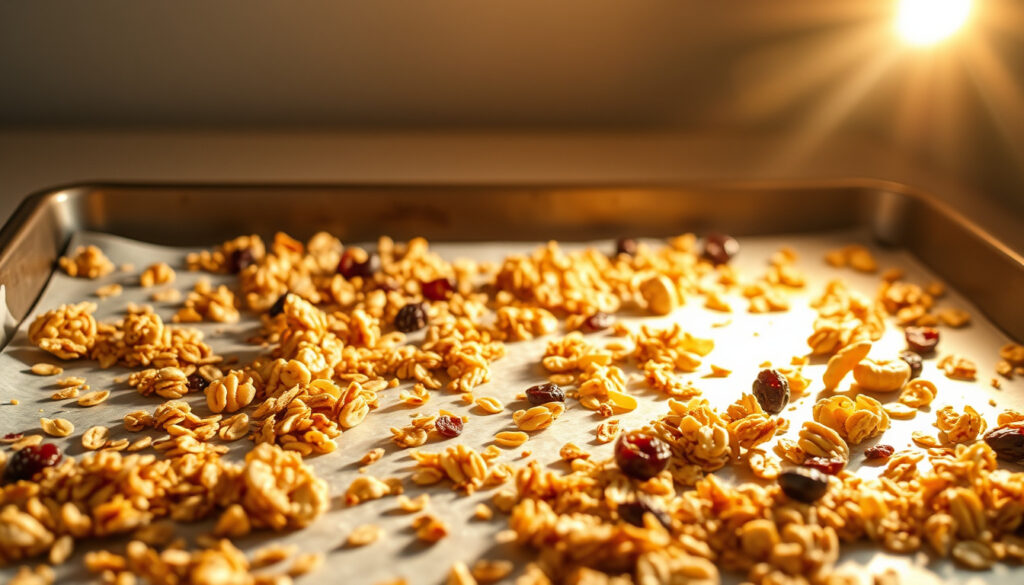
How to Make Granola – Easy Crispy Recipe Guide
How to Make Homemade Granola: Easy Recipe Guide
Homemade granola can be made crispy and clumpy with simple ingredients like oats, nuts, seeds, maple syrup, and a little water or apple sauce for binding—no oil or refined sugar needed. It is healthy, vegan, and stays fresh for up to 3 weeks in an airtight container.
Making granola at home ranks among the simplest kitchen projects that yield consistently delicious results. The process requires only one bowl, about 10 to 15 minutes of prep work, and basic ingredients that most pantries already contain. Unlike store-bought versions packed with added oils and preservatives, homemade granola allows complete control over what goes into each bite.
This guide covers everything from selecting the right oats to achieving those coveted crunchy clusters. Whether following the classic oven-baked method or trying the stovetop approach, the principles remain the same: gentle handling, patient baking, and allowing adequate cooling time for optimal texture.
What Ingredients Do You Need for Homemade Granola?
30 mins
6 cups
Easy
150–200 per ½ dl
The ingredient list for basic granola remains short and adaptable. Each component serves a specific purpose in building flavor and texture.
- Use old-fashioned rolled oats as the base—they provide the best texture compared to instant varieties
- Mix nuts and seeds for added protein, healthy fats, and satisfying crunch
- Sweeten naturally with maple syrup or mashed dates for lower sugar content
- Add binding agents like apple sauce or banana mash to eliminate the need for oil
- Include vanilla or cinnamon for subtle flavor depth
- Finish with a pinch of salt to enhance all other flavors
Understanding the Role of Each Ingredient
Rolled oats form the foundation of every granola recipe. Their shape and texture hold up well during baking while absorbing sweeteners evenly. For gluten-free versions, certified gluten-free oats work seamlessly in the same proportions.
Nuts and seeds contribute both nutrition and textural variety. Almonds, walnuts, and cashews add richness, while flaxseed, chia, sunflower seeds, and pumpkin seeds bring extra protein and healthy fats. Combining several types creates more complex flavor than using a single variety.
Maple syrup or date paste serves as the primary sweetener. These options provide natural sweetness with less refined sugar than commercial granola typically contains. The syrup also aids in cluster formation by acting as a binder during baking.
Apple sauce, banana mash, or simply water can replace traditional oil. These alternatives keep the mixture moist enough to form clusters while reducing overall fat content significantly.
| Fact | Detail |
|---|---|
| Prep Time | 10–15 mins |
| Bake Time | 40–45 mins |
| Total Yield | 6 cups |
| Storage (room temp) | 1–3 weeks airtight |
| Storage (frozen) | Up to 1 month |
| Calories per serving | 150–200 kcal |
How Do You Make Homemade Granola Step by Step?
The method for making granola involves mixing wet and dry ingredients separately, combining them gently, and then baking low and slow until crispy. Each step influences the final texture.
Preparing the Mixture
Start by preheating the oven to 160–175°C. Line a baking sheet with parchment paper to prevent sticking and ensure easy cleanup. In a large bowl, combine the oats, chopped nuts, and seeds. In a separate smaller bowl or directly in the measuring cup, mix the maple syrup, vanilla, apple sauce, and salt until well combined.
Pour the wet ingredients over the oat mixture and stir until everything is evenly moistened. The mixture should hold together when squeezed but not appear wet or soggy. This stage requires restraint—overmixing breaks down the oats and prevents cluster formation.
Shaping and Baking
Spread the mixture evenly across the prepared baking sheet. For chunky clusters, press down firmly using a fork or spatula to compress the mixture before it enters the oven. This compression encourages the ingredients to bind together during baking.
Bake for 40–45 minutes total, stirring or flipping the mixture every 10 minutes to promote even browning. Check the granola at the 20-minute mark to ensure it is not browning too quickly. Lower the temperature if edges appear to be darkening rapidly.
Press the mixture firmly before baking, minimize stirring during the process, and most importantly—allow complete cooling on the baking sheet. Clusters form as the granola contracts during cooling; resist the urge to stir immediately after removing from the oven.
Cooling and Storing
Once baking completes, leave the granola on the baking sheet to cool entirely. The granola continues drying out during this resting period and becomes significantly crispier as it cools. After cooling completely, break into clumps and transfer to an airtight glass container.
The texture depends heavily on proper cooling—rushing this step results in soft, chewy rather than crispy granola.
How Can You Make Variations Like Oil-Free or Granola Bars?
The basic recipe adapts easily to accommodate different dietary preferences and desired formats. Several popular variations require only minor adjustments to the core method.
Stovetop Method Without an Oven
For those without oven access or seeking a quicker alternative, the stovetop method delivers comparable results. Combine ingredients as directed, then heat in a skillet over medium heat for 10–15 minutes while stirring constantly until golden and crispy. This approach works particularly well during warm months when turning on the oven feels impractical.
Transforming Granola into Bars
Press the mixture firmly into a lined baking pan and bake for 25–30 minutes until set. Cut into bars while still warm, then allow cooling completely before removing. The bars hold together better when the mixture is pressed very firmly before baking.
Replace oats with additional nuts, coconut flakes, and seeds for a grain-free version. The texture changes noticeably—denser and more brittle—but the flavor profile remains satisfying.
Flavor Customizations
Numerous add-ins personalize the base recipe. Coconut flakes contribute tropical notes and extra crunch. Dried fruits such as raisins, cranberries, or apricots add sweetness and chewiness—always fold these in after baking to prevent burning. Cocoa powder or chocolate chips create a dessert-style variation. For something different, try adding candied ginger for warmth or lemon zest for brightness.
Reducing calories while maintaining satisfaction involves using more seeds and less syrup. Seeds add bulk and nutrition without the calorie density of nuts, creating a lighter result that still feels filling.
How Should You Store Homemade Granola?
Proper storage preserves the fresh, crispy texture that makes homemade granola superior to commercial varieties. Several factors affect how long the granola remains at its best.
Room Temperature Storage
An airtight container at room temperature keeps granola fresh for 1 to 3 weeks. The exact duration depends on humidity levels—drier environments extend shelf life while humid conditions shorten it. Always ensure the granola has cooled completely before sealing the container, as trapped warmth creates condensation that softens the mixture.
Freezing for Extended Storage
For longer-term preservation, portion the granola into freezer-safe bags and store for up to one month. Thaw at room temperature in the sealed bag to prevent moisture absorption. The texture after freezing remains excellent when properly sealed.
Moisture is the enemy of crispy granola. Always use completely dry utensils when serving, and never leave the container open in humid environments. If granola begins to soften, spread it on a baking sheet and warm briefly in the oven at 150°C for 5 minutes, then cool completely before re-storing.
Understanding factors affecting food freshness helps maintain quality over time. The absence of preservatives in homemade versions means slightly shorter shelf life but cleaner ingredients throughout.
What Does the Granola-Making Timeline Look Like?
From start to finished, granola requires approximately one hour and ten minutes, with most time spent waiting rather than actively working. The hands-on portion takes only 15 to 20 minutes.
- Mix ingredients (5 minutes): Combine oats, nuts, seeds, syrup, vanilla, apple sauce, and salt in one bowl
- Spread on baking sheet (2 minutes): Distribute mixture evenly and press firmly to form clusters
- Bake with stirring (20–25 minutes): Place in preheated oven, stir every 10 minutes, check at 20 minutes
- Cool completely (30–60 minutes): Leave undisturbed on baking sheet until completely cooled
- Store in airtight container (2 minutes): Break into clumps and transfer to glass jar
What Is Known and What Remains Unclear About Granola?
Certain aspects of granola preparation have been thoroughly documented through countless home cooking tests, while others involve more individual variation.
| Established information | Variables that depend on conditions |
|---|---|
| Baking time varies by oven; check at 20 minutes | Exact browning level preferred varies |
| Clusters form during cooling; no stirring post-bake | Optimal cluster size depends on personal preference |
| Shelf life: 2 weeks dry, 1 month frozen | Actual freshness duration varies with humidity |
| Apple sauce successfully replaces oil | Ideal sweetener amount varies by sweetness preference |
How Did Granola Become a Kitchen Staple?
Granola traces its origins to the late 1800s health food movement in the United States. Dr. John Harvey Kellogg and his sister Ellen developed early versions as part of their wellness philosophy at the Battle Creek Sanitarium. These original formulations emphasized whole grains and natural ingredients long before such concerns entered mainstream food conversations.
Modern granola bears little resemblance to those early experiments, yet the core appeal remains unchanged: a portable, nutritious breakfast that people can customize to their own tastes. Contemporary versions accommodate virtually every dietary restriction while maintaining the spirit of wholesome simplicity that made the original concept appealing.
Homemade versions consistently outperform store-bought alternatives in nutritional profiles. Controlling sweetener quantities and eliminating added oils results in lower sugar and fat content while preserving or improving fiber and protein levels.
What Do Credible Sources Say About Granola?
The nutritional benefits of oats, granola’s primary ingredient, have been documented extensively by health authorities. According to research from the National Institutes of Health, whole grain consumption is associated with reduced risk of cardiovascular disease and improved digestive health.
Whole grains like oats provide sustained energy, essential fiber, and important micronutrients that processed breakfast cereals often lack. The fiber content supports digestive health while the complex carbohydrates provide steady blood sugar levels throughout the morning.
— USDA National Agricultural Library nutrition data
Choosing whole grains over refined options significantly impacts long-term health outcomes. Oats contain beta-glucan, a type of soluble fiber that has been shown to support heart health when consumed regularly as part of a balanced diet.
— Harvard Health Publishing on whole grains
The American Heart Association recommends incorporating whole grains like oats as part of a heart-healthy diet. Studies published in the Mayo Clinic Proceedings have shown that regular oat consumption can contribute to maintaining healthy cholesterol levels.
What Comes Next After Making Your First Batch?
Once comfortable with the basic method, numerous directions expand the granola-making repertoire. Try adding chocolate chips or chunks after cooling for a sweeter treat. Mix leftover granola into overnight oats for added texture and nutrition. Scale the recipe for weekly meal prep—larger batches freeze perfectly and provide quick breakfast solutions throughout busy mornings.
Serving suggestions extend beyond breakfast bowls. Sprinkle granola over smoothie bowls, use it as a topping for pancakes or acai bowls, or simply enjoy a handful as an afternoon snack. The versatility makes it one of the most practical homemade foods to keep in the pantry.
For those interested in exploring the broader context of whole grains in modern diets, the Academy of Nutrition and Dietetics provides comprehensive guidance on incorporating nuts and seeds into a balanced nutritional plan.
Frequently Asked Questions
What is the simplest granola recipe for beginners?
Combine 3–4 cups rolled oats, 1–2 cups mixed nuts and seeds, 1–2 tablespoons maple syrup, 2–3 tablespoons apple sauce, and a pinch of salt. Bake at 160–175°C for 40–45 minutes, stirring every 10 minutes.
Is homemade granola actually healthy?
Yes. Compared to commercial varieties, homemade granola typically contains less sugar, no added oils, and more fiber and protein from whole ingredients like nuts, seeds, and oats.
How much oil should granola contain?
Oil is optional. This recipe uses apple sauce or mashed bananas as binding agents instead, reducing fat content while maintaining cluster formation and moisture.
How do you keep granola crispy after storage?
Ensure complete cooling before sealing, use an airtight container, keep at room temperature away from humidity, and use dry utensils when serving.
Can you make granola without an oven?
Yes. The stovetop method involves heating the mixture in a skillet over medium heat for 10–15 minutes while stirring constantly until golden and crispy.
Why is my granola not forming clusters?
Insufficient pressing before baking, too much moisture from wet ingredients, or stirring too frequently during baking all prevent cluster formation. Press firmly, ensure the mixture is not soggy, and avoid stirring after the initial spread.
How long does homemade granola last?
Stored in an airtight container at room temperature, granola stays fresh for 1–3 weeks. Frozen in sealed bags, it maintains quality for up to one month.
What can go wrong when making granola?
Common issues include burning (check early and reduce temperature if browning quickly), excessive sweetness (reduce syrup to 1 tablespoon), and insufficient crispness (bake longer and cool completely before storing).
Flere relaterte innlegg
 Frank Løke boksekamp: Dato, resultat og kritikk fra eksperter
 Else Helene Sundt: arving, formue og strandlinjekamp
 Sandnes Garn oppskrifter til barn: Gratis 1407 Bomull
 Ringstad Blomster minnesider – Slik finner du og oppretter
 Hente ut medisiner for andre – fullmakt og regler
 Girl in Red: Hva står det for? Marie Ulven Ringheim
 Hva er en DevOps-pipeline? Faser, CI/CD og verktøy
 Flightradar24 Flight Tracker – Guide til funksjoner og nøyaktighet
